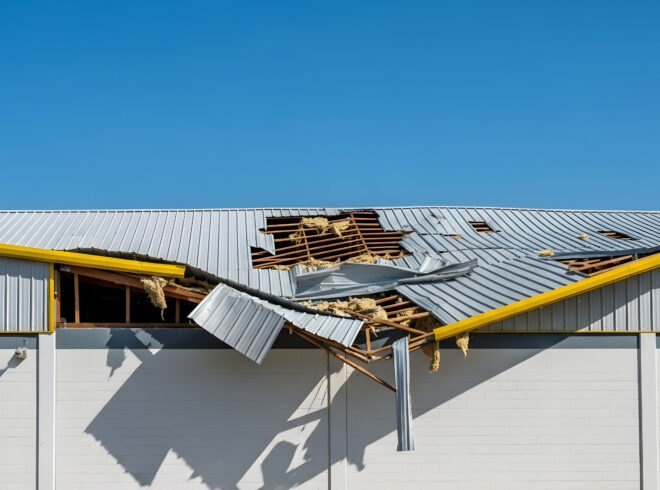
Commercial roof leaks don’t always show up where the water enters. An interior stain on the ceiling can appear to be directly over a damaged roof, but the problem can be several feet away. Water can flow over roofing materials, insulation, decking, beams, and other building elements to the interior.
It is much harder to conduct commercial roof leak tracing when you cannot see the stain above. To locate the source, you must understand how water moves through a commercial roof system and use inspection techniques that detect moisture.
Water flows are not always vertical. Once it has penetrated through a damaged membrane, failed flashing, seam, or puncture, gravity can cause it to travel sideways through the roof assembly.
Water can run down the roof, under the roof insulation, or over the decking until it flows to a low point or an opening. This means that a roof leak far from a water stain is a frequent occurrence in commercial buildings.
Commercial roofs have various layers including membranes, insulation, cover boards, vapor barriers, and decking. All of these can impact water flow.
Along the Deck
Water may flow through the seams, joints, and slight changes in elevation in metal or other decking materials until it reaches an opening.
Through Insulation
Some insulation materials can trap or retain moisture, and other materials can allow water to flow from surface to surface. The original entry point may be hard to find with wet insulation.
Around Penetrations
HVAC units, pipes, vents, skylights, drains, and other penetrations are common areas for leaks. These can be damaged, aged, or have gaps that allow water to enter.
Along Building Components
Water can run along beams, fasteners, supports, etc. in the structure. This can take moisture away from the point of entry into the roof and cause confusing patterns within the building.
A visual inspection will detect damaged membranes, flashing, punctures, ponding water, and failed sealants. But not all leaks are obvious.
Hidden commercial roof leaks can be there under a membrane or insulation. Water can get into the building and cause interior stains long after.
Professionals thus use visual inspection along with other testing. Considering only the stain may treat the symptom, not the cause.
There are different commercial leak detection methods that can be used to help identify moisture and trace its flow.
Moisture Detection
Moisture meters can detect moisture pockets under the roofing system.
Infrared Inspection
Under certain conditions, differences in temperature can be detected using infrared technology that is linked to moisture.
Roof Core Testing
A roof core sample can provide information on wet insulation, roof assembly layers, and moisture spread.
Targeted Testing
Experts can check drains, seams, flashing, roofing equipment, and penetrations. Using evidence together may help find the source of a commercial roof leak.
Read More: How Professional Commercial Roof Leak Repair Protects Your Building and Assets
The following are signs that water is flowing:
The challenge with commercial roof leaks is that water can travel through many layers and building elements before it is seen. The location of an interior stain does not necessarily indicate the location of the roof failure.
If leaks continue to recur or the visible damage is not directly over the roof area where the leak is occurring, a professional investigation may be able to help determine the location and movement of the water. Accurate tracing allows for more targeted repairs and can help prevent further moisture damage to the building.
If your commercial roof continues to leak, it’s time to schedule a professional inspection. 911 Commercial Roofing can look into hidden leaks, find out where the water may be entering, and give you a plan of action for the repair of your commercial roof. Get in touch with us today to discuss your roofing problems.


Contact with us through our representative or submit a business inquiry online.
Contact© 2026 911 Commercial Roofing All rights reserved. Designed By 
 972-900-5087
.png) support@911commercialroofing.com
support@911commercialroofing.com